3 Min Read • March 19, 2026
How CDK Digital Retail Supports FTC-Aligned Pricing

Recently, the Federal Trade Commission (FTC) warned dozens of dealer groups across the country to comply to a firm set of standards when it comes to advertising and presenting car prices. Dealers looking to make sure they adhere to these requests to avoid future non-compliance should know that there are solutions available that meet this moment. CDK Digital Retail provides dealers with the tools needed to align digital retailing and advertising practices with the FTC’s enforcement approach by:
- Enabling true all-in vehicle pricing
- Properly separating conditional incentives from advertised prices
- Making add-on products optional and clearly disclosed
- Accurately displaying available and in-transit inventory
- Ensuring consistency from advertising through contract
Below are four key areas dealers using CDK Digital Retail can focus on.
1. All-In, Consistent Online Pricing
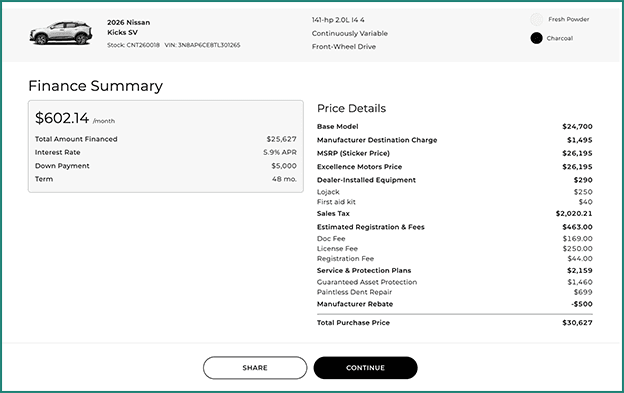
CDK Digital Retail allows dealers to build vehicle prices that include required dealer fees (such as doc fees or mandatory accessories), with that price flowing consistently through vehicle listings, payment calculations and deal structures; helping reduce gaps between what’s advertised and what the customer ultimately pays.
By default, the platform supports a fully transparent price breakdown, displaying items such as taxes, fees, total purchase price and APR. At the same time, CDK Digital Retail provides dealers with configurable options on a store by store basis to control how pricing details are displayed in digital and printed presentations. This includes the ability to hide or show specific elements and to present alternative views, such as a base (pre tax) payment for lease buyers.
When used as intended, these capabilities give dealers the tools to maintain pricing consistency and transparency across the digital journey, while allowing flexibility to align with individual store preferences and processes.
2. Controlled Rebate & Incentive Presentation
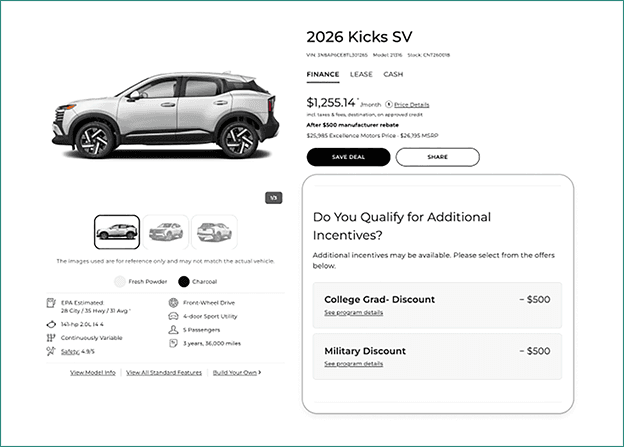
CDK Digital Retail ensures that rebates and incentives are presented in a clear and compliant way by automatically separating them from the headline vehicle price.
- Incentives that all buyers qualify for are surfaced appropriately
- Any rebate with eligibility requirements is clearly identified as conditional and displayed separately
- Personalized incentives are only applied after consumers self identify eligibility, preventing conditional offers from being baked into advertised prices and reducing the risk of misleading pricing
This approach helps dealers present incentives accurately and consistently across the digital retail journey, aligning advertised pricing with FTC expectations while maintaining flexibility for dealer specific programs.
3. Transparent Add-On & F&I Disclosure
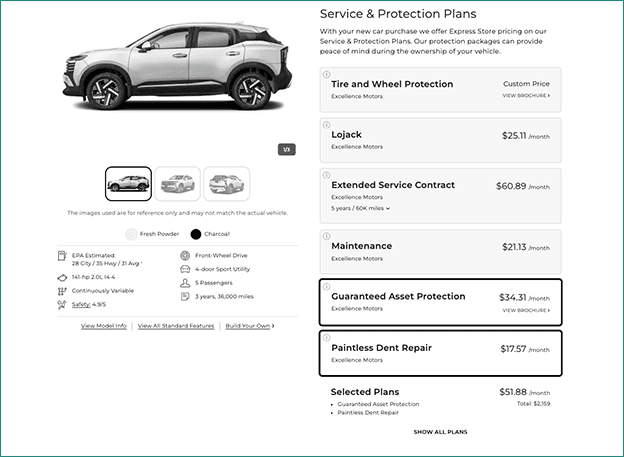
CDK Digital Retail supports transparent presentation of optional F&I products by showing them after the base vehicle price, clearly marking them as optional, itemizing them in a digital menu, and reflecting payment changes in real time when customers opt in.
Today, this experience is fully supported in the consumer-facing storefront, ensuring shoppers clearly understand which products are optional and how selections impact their payment. Enhancements to extend this same level of transparency and real time payment visibility into digital presentations and worksheets are actively in progress, ensuring greater consistency across the end to end deal workflow.
When fully leveraged, these capabilities help dealers clearly distinguish between vehicle price and optional add-ons, aligning with FTC expectations while maintaining a customer friendly buying experience.
4. Accurate Vehicle Availability
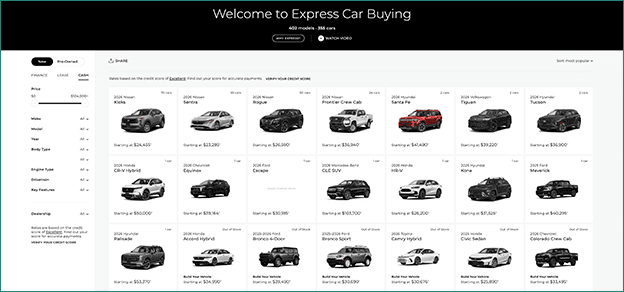
CDK Digital Retail integrates with live inventory systems to support accurate vehicle availability throughout the digital shopping experience. The platform includes functionality to display whether a vehicle is available, sale pending, sold, or in-transit, helping dealers prevent advertising vehicles that cannot actually be purchased. Availability statuses can be clearly labeled or vehicles can be suppressed from active listings based on dealer configuration. In transit vehicle status is in production and actively used today, allowing dealers to promote upcoming inventory while maintaining transparency.
When enabled and governed appropriately, these capabilities help align inventory advertising with actual vehicle availability, supporting FTC expectations for truthful and non misleading vehicle listings while allowing dealers flexibility in how availability information is presented.
Share This

Namu Keys shapes product strategy and customer engagement drawing on comprehensive dealership and OEM digital retail experience. He focuses on delivering solutions that improve the car‑buying journey, strengthen customer partnerships, and help dealerships drive measurable performance and sustainable operations.


