3 Min Read • August 24, 2026
The Battle Between Transparency and Buyers’ Desire to Haggle

Price negotiation has long been one of the most time-consuming stages of the vehicle purchase process. Today, car dealers are facing a new challenge. Namely, regulatory pressure for up-front price transparency that should theoretically take a lot of the pain out of the negotiation process. Whether this is a one-price store or not, a transparent car listing and sales process should reduce the amount of, or even the need for, negotiating on price.
But what about the customer who likes to haggle?
In Q2, we asked over 1,000 car buyers what they viewed as the most attractive type of discount, from cash back to low APR. The majority said it was the amount of the dealer discount.
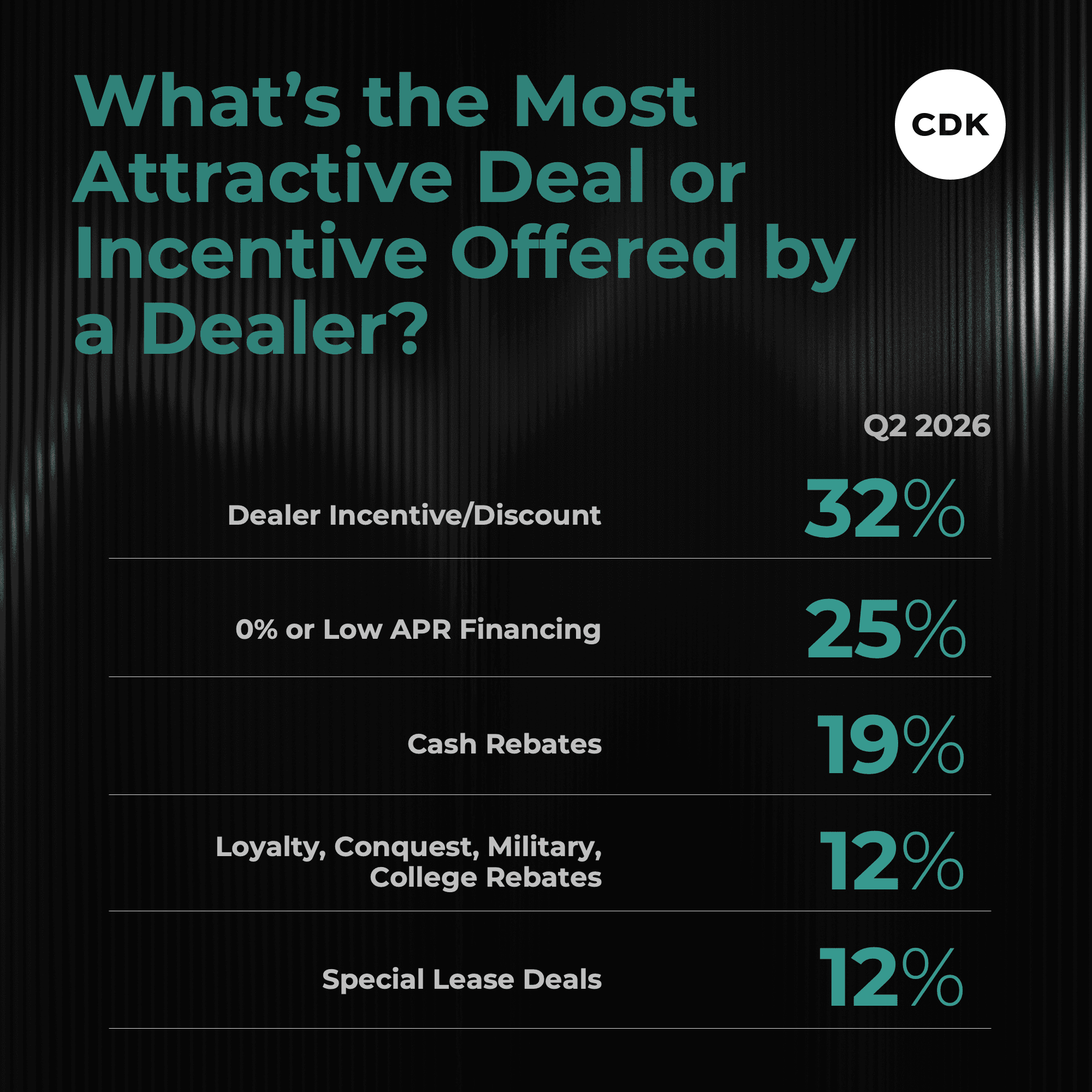
There’s clearly a need for transparency and, at the same time, a desire to get the best deal possible, which many shoppers feel comes from the dealer’s well of incentives. CDK’s overall Ease of Purchase score — was it easy to buy your car — has hovered around 80% since June. That’s lower than the annual average of the past three years.
When we break down the purchase process and rank how easy it was to agree on the final price, the average from June through August was 61%. A bit below the three-year average of 62%. That means all the effort on transparency isn’t moving the needle. Could it be making things worse with the hagglers?
If many buyers still associate a successful purchase with “winning” the negotiation, what’s the path forward? The answer may not be eliminating negotiation but changing what negotiation looks like.
Negotiation Isn’t Dead — It’s Evolving
Customers in our survey explained what might be behind the tepid results surrounding the negotiation stage. They point to frustration when negotiations become lengthy, confusing or lack transparency.
One respondent said, “The negotiations took a really long time, but I got a price I was happy with.” What’s telling is what the customer didn’t say. The frustration wasn’t with negotiating. It was with the amount of time it took to reach an agreement.
And in a market where incentives are shrinking and car prices are high, there’s dismay about the lack of dealmaking too. “The dealership could’ve gone lower on the price,” was a sentiment of many respondents over the past few months.
The dealership didn't want to negotiate and let me know that it's their way or the highway.
Other comments highlight a different issue: trust. One buyer said, “The process was difficult because there was a lack of transparency regarding the ‘out-the-door’ price.” And over the past few months, many of the positive respondents pointed to transparency throughout the entire purchase process.
The takeaway is that buyers still expect dealers to work with them. They want to know they receive every available incentive, understand how the numbers were calculated, and feel confident there were no surprises at the end of the process. But how do dealers balance these “wants” with regulatory pressure for transparent pricing in advertising?
The Future Is Transparent Negotiations
Rather than viewing transparency and negotiation as competing priorities, dealerships should see them as part of the same conversation. Buyers don’t necessarily need to negotiate every line item. They want confidence that all options have been considered and that they understand how the final deal was built.
That means showing and not simply telling. Instead of presenting only a final payment, Sales consultants and F&I Managers can walk customers through how the numbers come together, including
- Manufacturer rebates and incentives
- Dealer discounts or offers
- Financing options and their impact on monthly payments
- Trade-in valuations
Digital retailing tools can make these conversations easier by allowing for comparisons between different scenarios in real time. Buyers can see how incentives, financing terms and trade values affect their payment instead of wondering whether a better option exists.
Perhaps the future of negotiation isn’t removing the conversation around price. It’s making that conversation more transparent, collaborative and easier for customers to understand.
Share This