3 Min Read • October 6, 2026
Financial Hurdles Higher for Car Buyers in Q3

Overall car sales have remained resilient throughout the first three quarters of the year. But as we track consumer feedback about the dealership experience and financing, there were small but definitive steps backward in the third quarter.
For three years, CDK has tracked how easy the purchase process is for buyers in our monthly Ease of Purchase scorecard. Due to the acceleration of affordability conversations around the industry, we began to track a number of other factors from incentives, term length, negative equity, trade-ins and more. In Q3, we surveyed over 1,100 car buyers to figure out what’s driving their financing decisions.
Incentives
The auto industry pulled back on incentives as the year progressed and that was evident in our survey results. The number of buyers who took advantage of lease incentives and manufacturer deals to reduce their monthly payment fell from 37% in Q2 to 28% in Q3.
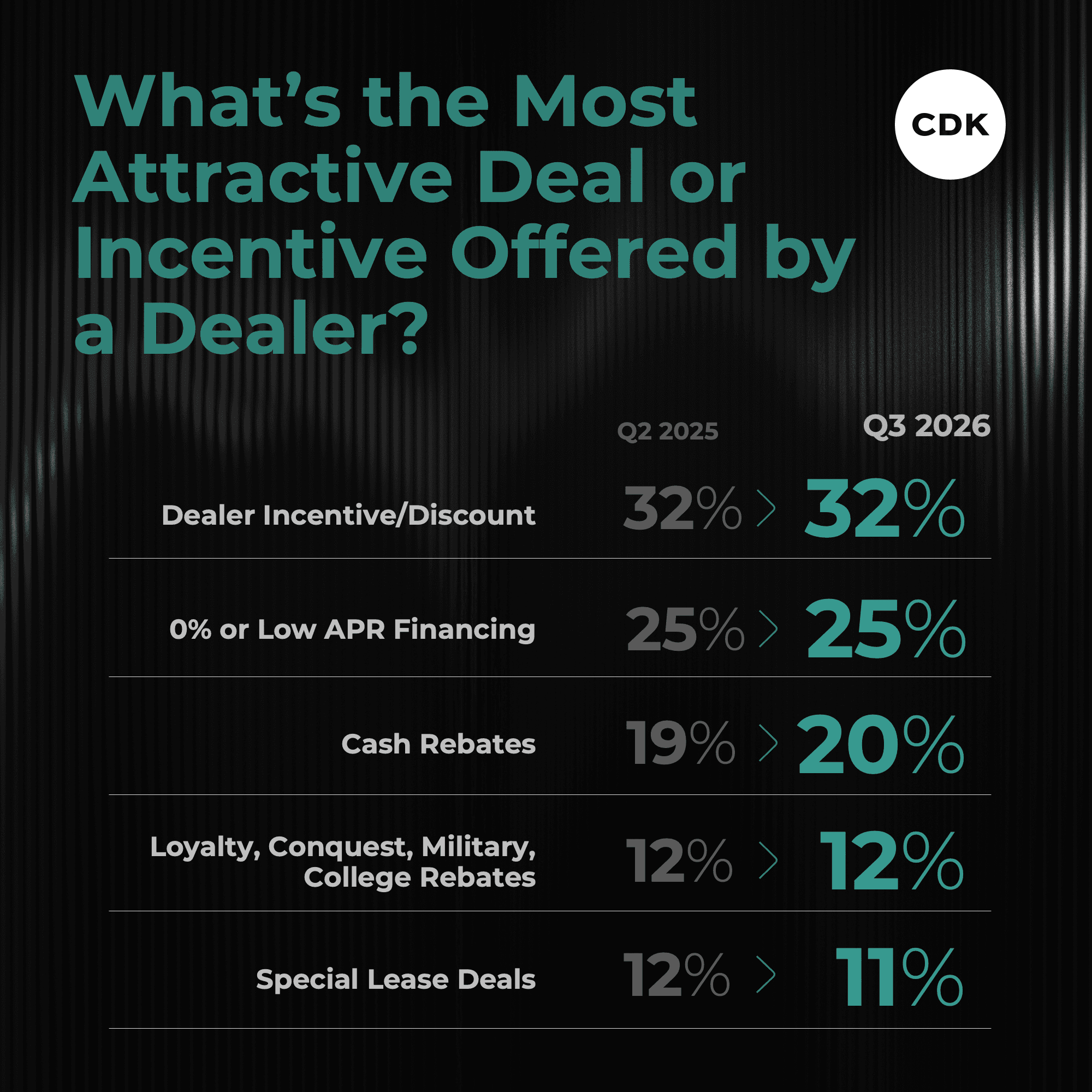
The types of incentives buyers were looking for barely changed in Q3. The top incentive was negotiating with the dealer at 32%, while 0% or low APR financings offers came in second at 25%. Both were identical to last quarter.
Nearly three quarters of respondents (72%) said they picked the brand of their new vehicle because it had the most attractive deals and incentives. Up from 69% in Q2.
Loan Terms
Slightly more buyers financed their vehicles in Q3 with a quarter paying cash. That’s down from 27% last quarter. There was a notable uptick in how many chose captive financing through an automaker, rising from 15% in Q2 to 19% in Q3. The rest financed through a financial institution or lending options offered by a dealership.
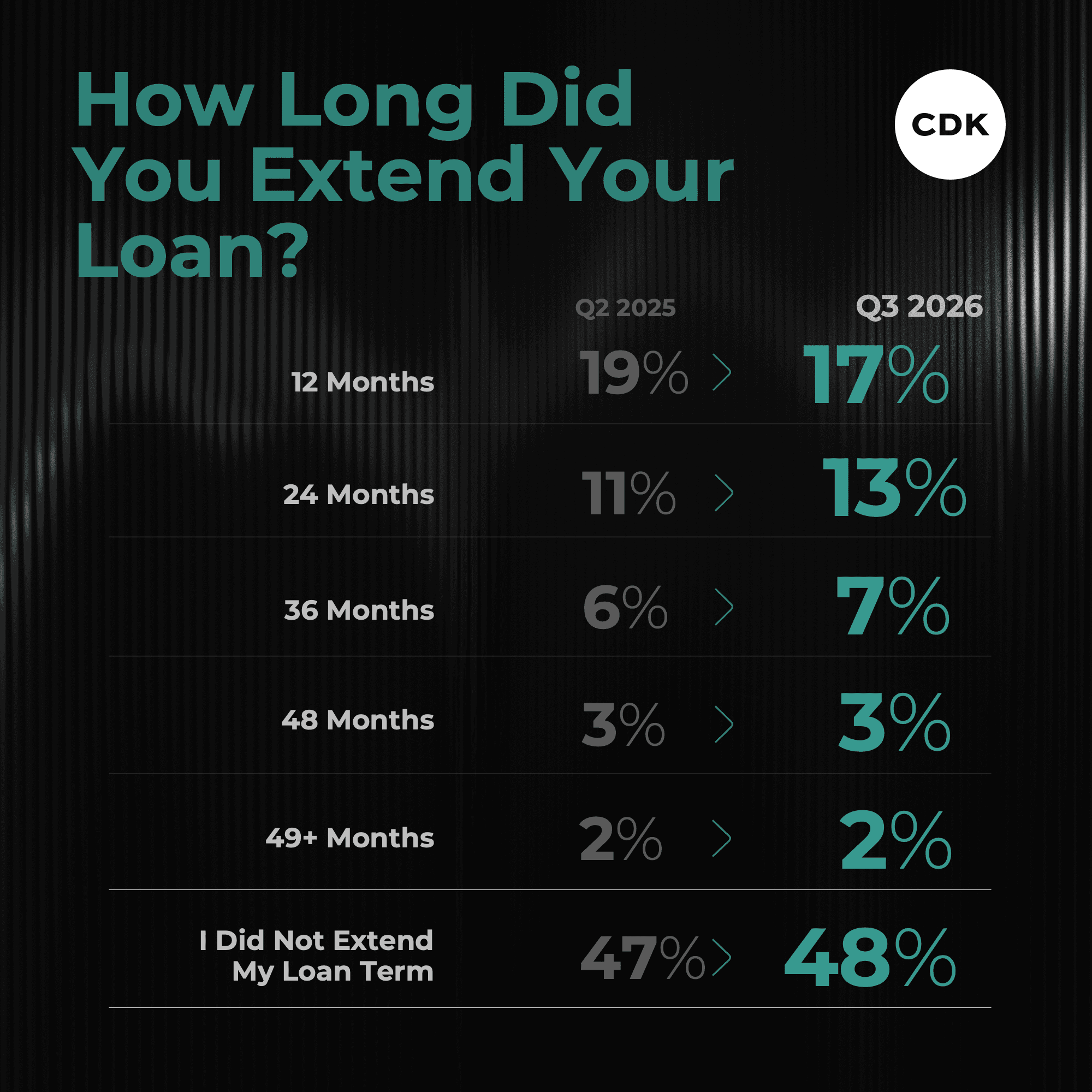
We also asked those who did finance if they decided to increase their loan terms to bring down their monthly payment. There was a small increase in those who said no, moving from 47% in Q2 to 48% in Q3. And those who extended the loan an additional two or three years increased as well.
Negative Equity
One indicator of car-buyer health is how much negative equity they’re carrying on their trade-in. While the best-case scenario is to avoid negative equity, of the 51% of buyers who said they traded in a vehicle in Q3, 63% said they had negative equity. That’s up from 58% in Q2 and far above the industry average of approximately a third of buyers.
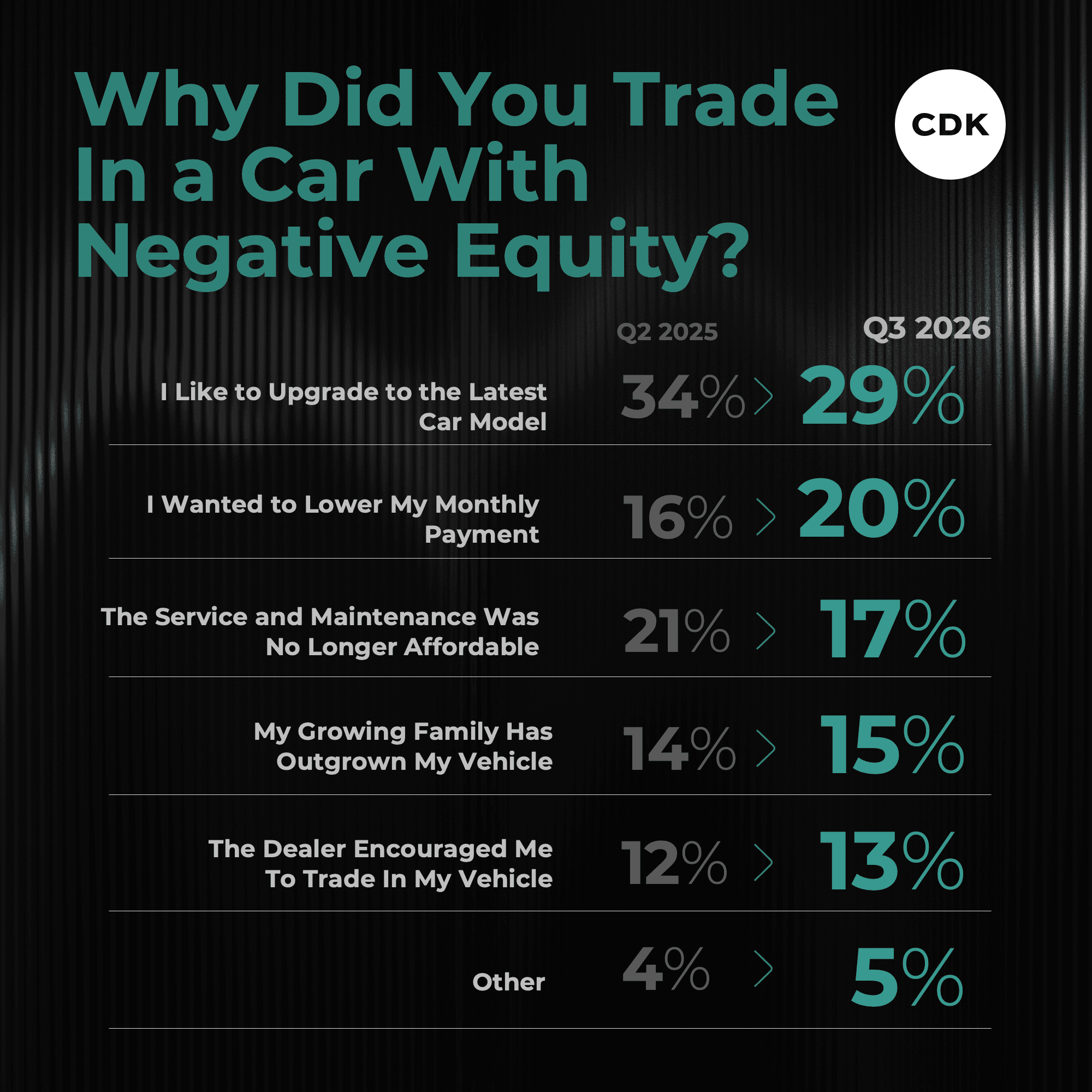
In our first report on negative equity, we found it surprising that the number one reason for an underwater deal was the desire to upgrade despite the financial hit. That number fell in Q3 to 29% but remains the top reason. The reason assumed to be atop the list — that they needed to make the deal to lower their monthly payment — moved from number three last quarter to second, with one in five (20%) respondents looking for a smaller number on their statement.
Affordability Is a Personal Issue
Explaining the affordable car market despite record overall transaction prices can be difficult and one reason why we started the CDK Affordability Tracker in January. To dig deeper into what buyers are thinking about what they’re paying, we also asked respondents what the term “affordable” means to them.
As an industry, we may believe an affordable car is one the “average” person can afford. However, only 15% of respondents agreed. The majority (53%) said affordable means they can pay for their car without sacrificing something else. Another third (32%) said an affordable car is worth the price they’re paying. This last option could also be more popular with buyers who are financially stable.
If for most buyers it’s all about sacrifice, that could mean changes in other monthly costs will hamper their likelihood to buy. Rising gas prices are top of mind for consumers today, but winter heating costs are expected to be especially high this year, adding one more expense that’ll be hard to sacrifice for a new car payment.
Share This

David Thomas is director of content marketing and automotive industry analyst at CDK Global. He champions thought leadership across all platforms, connecting CDK’s vast expertise to the broader market and trends driving our industry forward. David has spent nearly 20 years in the automotive world as a product evaluator, journalist and marketer for brands like Autoblog, Cars.com, Nissan and Harley-Davidson.


