3 Min Read • July 17, 2026
Why Car Buyers Are OK With Negative Equity

"Negative equity," or owing more on the auto loan than the vehicle is worth, may be the most negative industry term imaginable in the automotive industry right now. Every influencer in a dealership is talking about it. Media is covering it as part of the affordability "crisis." That’s not to say the concern is misplaced. According to some analysts, the average amount of negative equity is at a record high, just over $7,000, and one in three trades are carrying negative equity.
CDK decided to find out why buyers were making the decision to swap vehicles and take on more debt. As part of the monthly CDK Ease of Purchase Scorecard we added new questions about negative equity in Q2 with more than 1,000 respondents weighing in.
More Than Half of Respondents Had Some Negative Equity
Our Ease of Purchase Scorecard is meant to be a snapshot of the industry and not a comprehensive look at dealership data like the CDK Affordability Tracker. That’s why the 58% of buyers who told us they were trading in a vehicle with negative equity wasn’t a surprise, despite the number being so much higher than the industry norm of one-third. Just under 71% of respondents also reported income under $100,000 as well, more than the industry norm. Yet, this also gives us a much larger pool, as a percentage, to dive into and learn the reasons why they took the negative leap.
Practicality and Desire Equally Split
When the idea of negative equity initially comes up, many often think the customer is making an irresponsible decision. And yes, a third of buyers said they were trading in to trade up. These buyers like to upgrade their rides and while negative equity can be harmful financially, some of these deals are being made by customers who are financially well-off and don’t mind absorbing the loss of equity. Of course, many also likely made a poor decision.
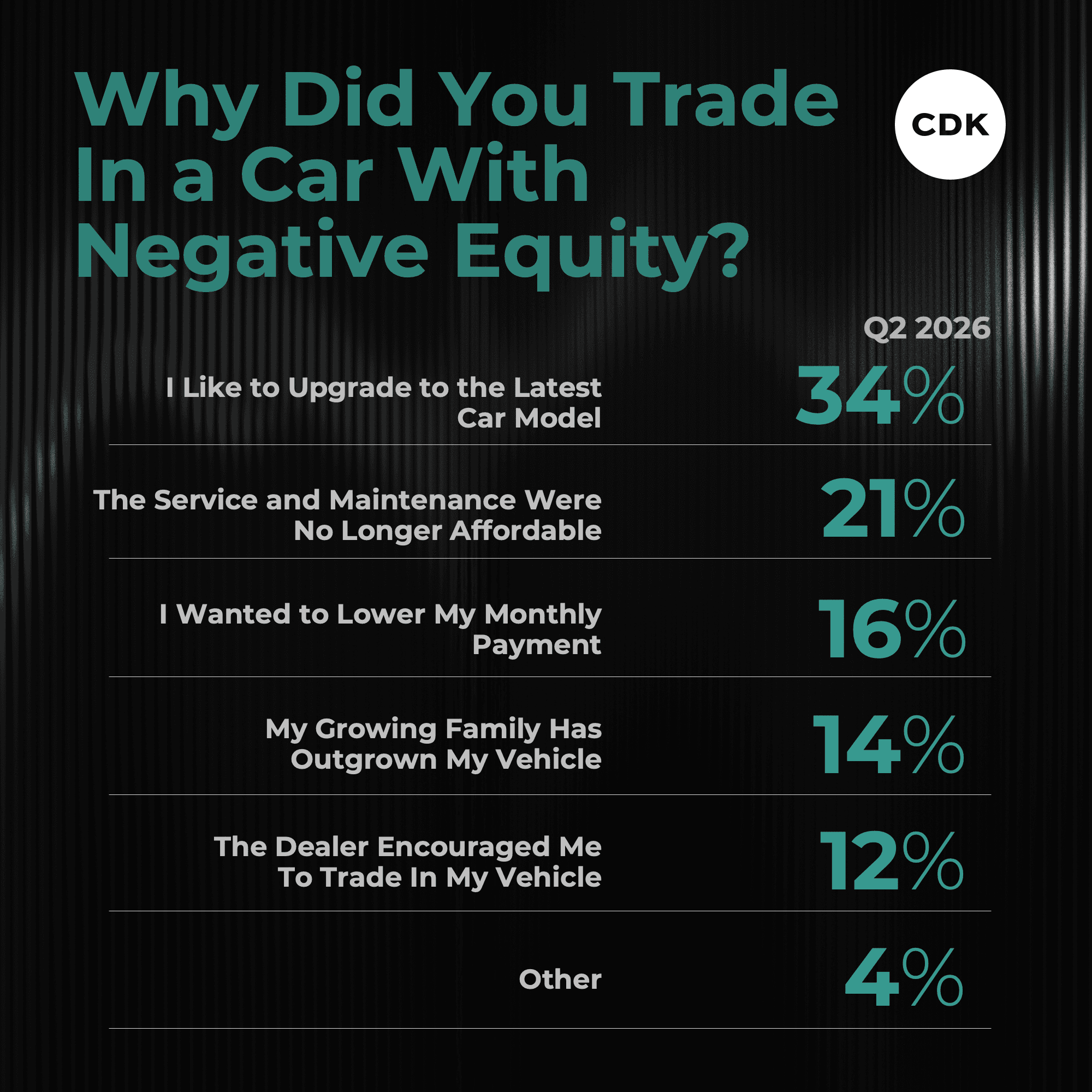
Indeed, 21% said the maintenance and service was no longer affordable, and another 16% said they wanted to lower their monthly payment. For example, a first-time luxury car buyer might not be prepared for higher maintenance costs. This could be the same case for a first-time buyer of a performance vehicle. Or, it could just be a buyer who’s never had to replace 20-inch, or larger, tires.
Another 14% of customers with negative equity were pulling the trigger because their family was growing. This also can be seen as a practical decision, and there’s no preparing a new parent for just how big a car seat truly is in the back seat of many cars — let alone two or three. This is why minivan market share remains so stable after all these years.
Educate Customers on Negative Equity
Dealers can meet their customers’ needs, whether practical or not, if they understand the why behind negative equity decisions. And the more buyers begin to understand the ramifications of negative equity, via more social media education and inside the dealership, the 58% number should start to fall.
Share This

David Thomas is director of content marketing and automotive industry analyst at CDK Global. He champions thought leadership across all platforms, connecting CDK’s vast expertise to the broader market and trends driving our industry forward. David has spent nearly 20 years in the automotive world as a product evaluator, journalist and marketer for brands like Autoblog, Cars.com, Nissan and Harley-Davidson.


