4 Min Read • November 9, 2026
Prices for Bestselling Cars Hit Yet Another Record

The main reason we launched the monthly Affordability Tracker was to highlight that the most popular cars in the country don’t follow the same price trends as the industry average transaction price. For most of the year, popular cars were outperforming the industry in terms of keeping costs low.
In October … that shifted.
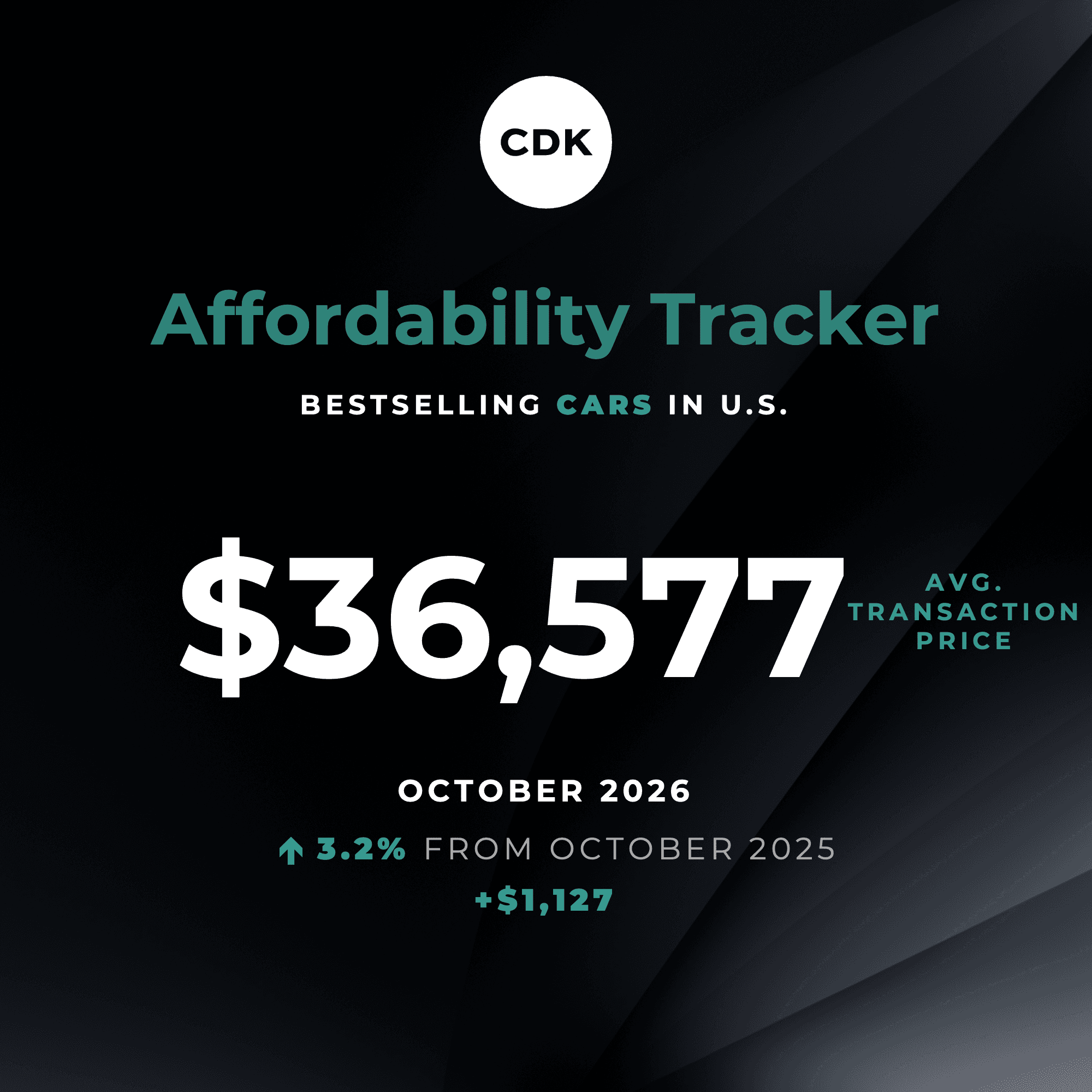
The average transaction price for the industry fell modestly below $50,000 while the most popular cars in the country hit their highest price to date at $36,577. That’s another record and up 3.2% year over year and 0.4% higher than in September ($149).
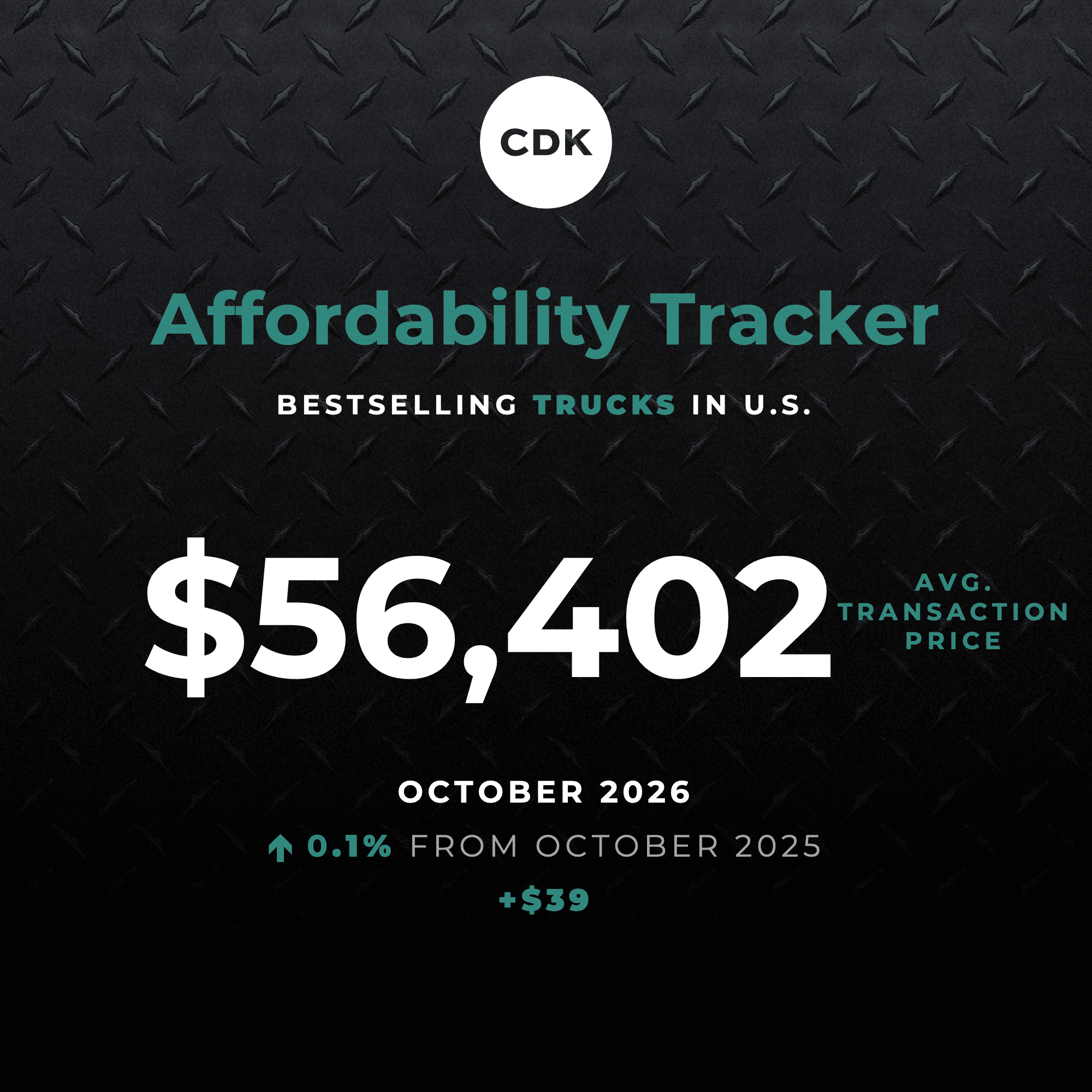
Driving the change is the increase in hybrid sales — with their higher sticker prices — along with stagnant incentives. The high gas prices driving hybrid sales had the opposite effect on truck sales and that led to more modest price gains.
As our most recent Ease of Purchase report revealed, consumers are spending more time and going to more dealers to find the car they want. If they’re hunting for popular models, they’re likely paying more.
The Results
Looking at our top 10 most popular vehicles, it takes a second to register that seven are either hybrid only or offer a hybrid version. We’ve always included hybrids in the calculations, excluding plug-in hybrids and fully electric versions. And while six of those seven all increased in price compared to last year, so did two of the three non-hybrids.
Not surprisingly, the Toyota RAV4 continues to have the highest price increase, with the average transaction price up 13.9% compared to last year. However, its $41,678 transaction price is the lowest we’ve seen since the redesigned, hybrid-only model hit dealerships in full this spring with mostly top-tier trims available.
Six other models saw more than a 1% increase from last October, meaning that while the RAV4 had the largest impact on the month’s total, it wasn’t the only popular model costing consumers more last month.
On the truck side of the ledger, the RAM 1500 is acting similarly to the RAV4, with the popularity of its non-hybrid Hemi engine returning, driving prices up 5.7% compared to last October. The Silverado saw a very small uptick in price while both the F-150 and Sierra fell, 1.8% and 1.9% respectively.
Discounts
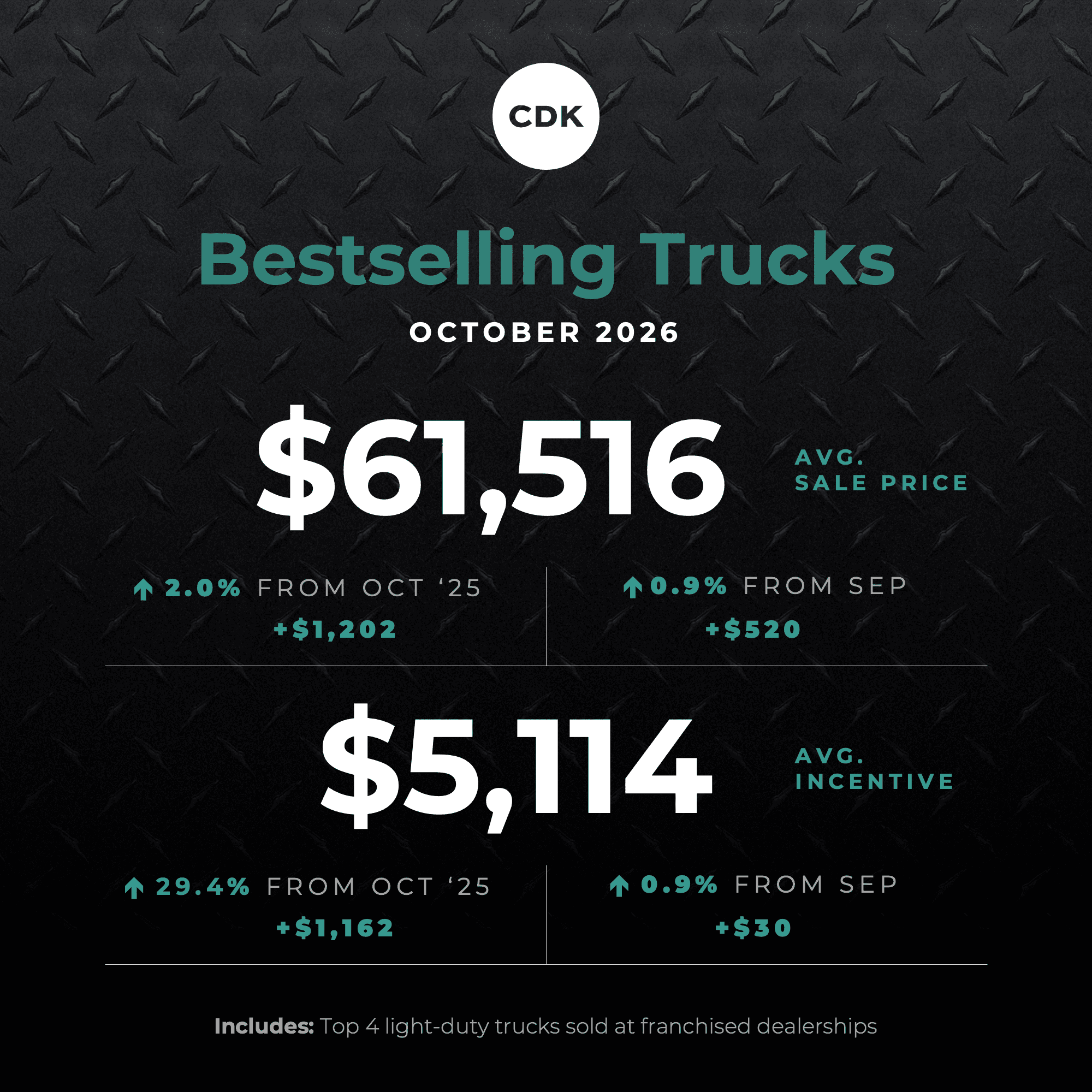
An even clearer divergence occurred around incentives in October. Truck incentives were up 29.4% while car incentives increased 8.9%. Most of that rise for trucks is attributed to the F-150, with incentives up 53.5% compared to last year. But for in-market buyers, the incentives are falling compared to recent months, which could mean deals on lots today are better than they may be tomorrow.
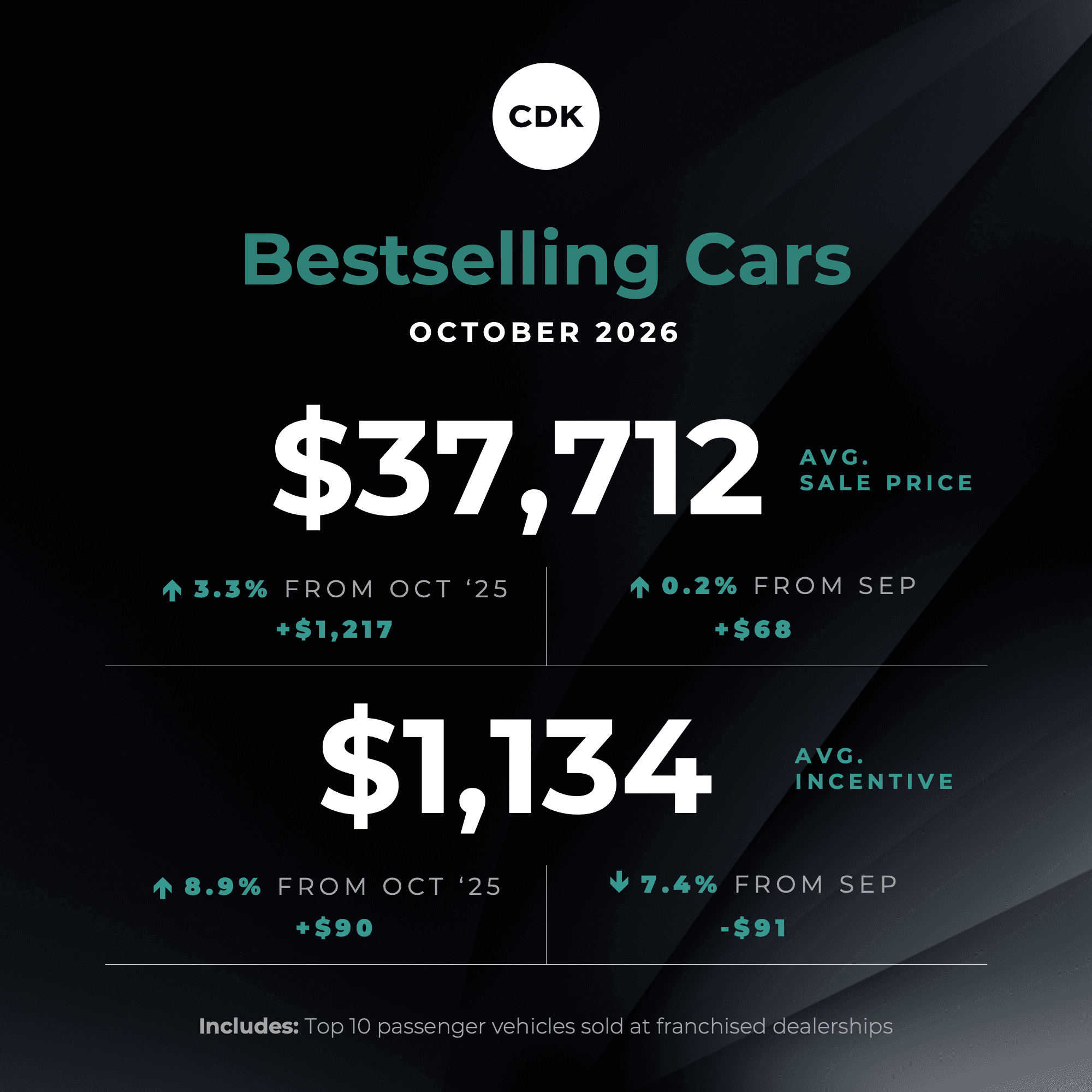
The $1,134 in average incentives for cars are the lowest since June but that trend is cyclical with October 2025 also being lower compared to the previous four months. If trends continue, expect lower incentives in November with a rebound in December.
How It Works
CDK selected the top 10 bestselling passenger vehicles* of 2025 sold at franchised dealerships (so no Tesla Model Y) according to automaker end-of-year sales results. Each month we take the average sale price and then subtract the average incentive amount (both dealer and automaker incentives) for the month and that leads to the average price paid, or transaction price, before taxes. All three are listed in our graphics.
The top 10 bestsellers in 2025 were:
- Toyota RAV4
- Honda CR-V
- Toyota Camry
- Toyota Tacoma*
- Chevy Equinox
- Toyota Corolla
- Honda Civic
- Hyundai Tucson
- Ford Explorer
- Nissan Rogue
We’ve also taken the top four bestselling light-duty pickup trucks in the country to show the difference in one of the most popular segments and one that customers generally don’t cross-shop with passenger vehicles. These include:
- Ford F-150
- Chevrolet Silverado
- GMC Sierra
- Ram 1500
There are over 250 distinct models for sale in the U.S. These 14** made up 26% of all cars sold in the U.S. in 2025.
*While the Tacoma is a truck, because of its massive popularity, it seemed appropriate to include it as consumer trends are skewing toward rugged options across the board.
**Passenger cars listed included their hybrid counterparts, some sport trims, etc. Trucks were done similarly. Only electric versions were excluded. For example, the Chevy Equinox EV and the Ford F-150 Lightning aren’t included. But Toyota Corolla Hybrids and Ford F-150 Raptors are included.
Share This

David Thomas is director of content marketing and automotive industry analyst at CDK Global. He champions thought leadership across all platforms, connecting CDK’s vast expertise to the broader market and trends driving our industry forward. David has spent nearly 20 years in the automotive world as a product evaluator, journalist and marketer for brands like Autoblog, Cars.com, Nissan and Harley-Davidson.


